About
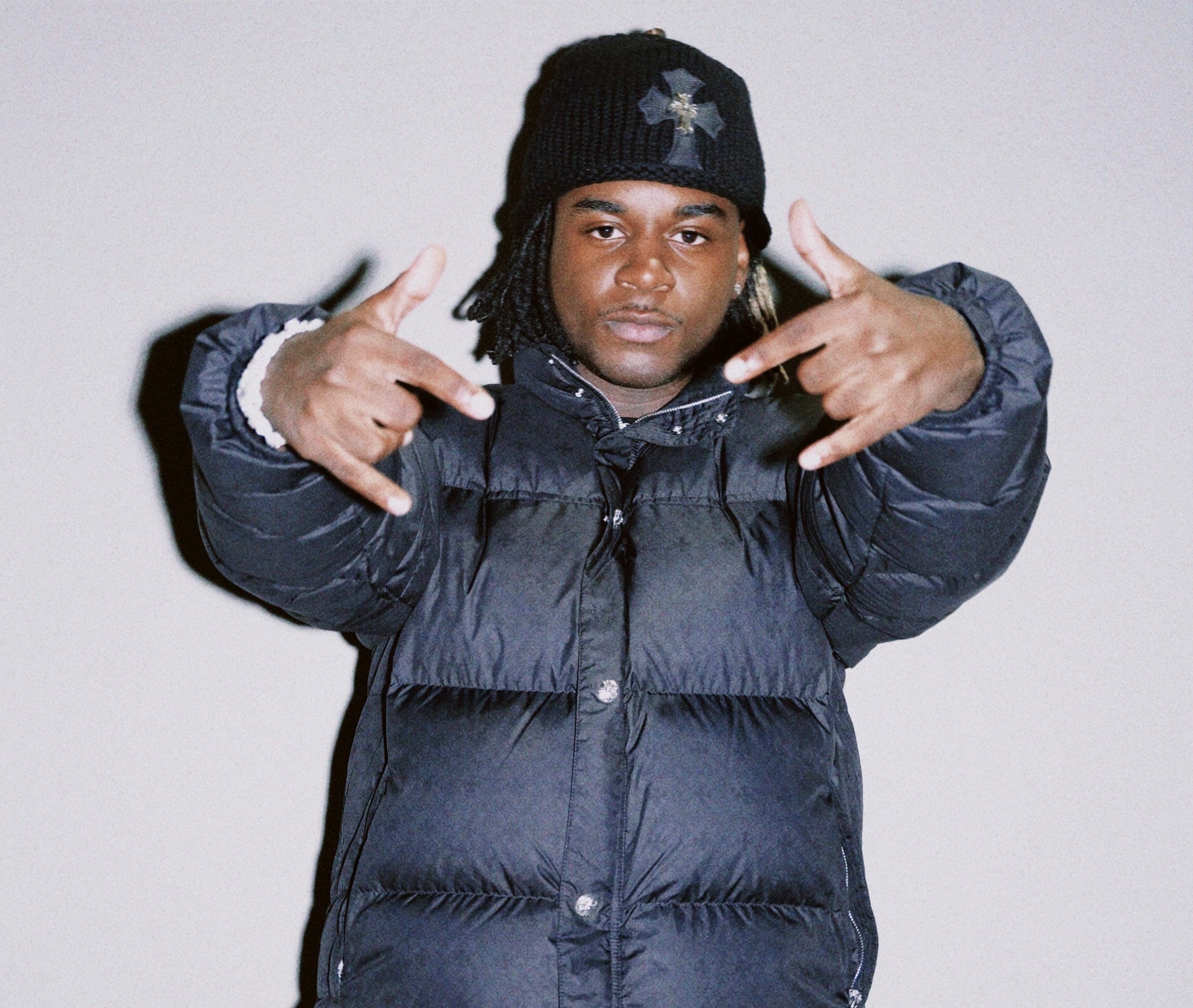
“I just feel like that’s the story of my life,” says Ken Carson, the wildly inventive, vocally adaptive rapper who has emerged as one of hip-hop’s can’t-miss breakout stars of the 2020s. He’s talking about his forthcoming album, A Great Chaos, the title of which captures the whirlwind that his existence has become—and the joy he takes in navigating that whirlwind with preternatural ease. “Shit be good,” he says, hesitating just before he adds the crucial caveat: “But life be life-ing.” That unpredictability, that sense that there’s always a complication around the corner, can be daunting. But it’s molded Carson into the artist he is today, ready to switch everything up at a moment’s notice.
Born Kenyatta Frazier Jr. in the spring of 2000 and raised in Atlanta, Carson is living proof of another maxim: that steel sharpens steel. That was his experience growing up around his uncle, the celebrated producer TM88, and the cadre of rappers who worked closely with him. “I was the youngest in every room that I went into,” Carson recalls. Observing the work habits of superstars like Young Thug and Playboi Carti inspired Carson to push himself, and to be unsparing about sifting through the demos he recorded to find the best material. Finally, the results were undeniable: “I was playing one of my songs around the house,” Carson says, “and TM88 was like, ‘Who the hell is that?’ I said, ‘This is me!’”
From the time he and his friends began putting together their earliest songs in middle school, Carson had been rapping off the top of his head, rather than scrawling his thoughts in notebooks. But this process, he explains, actually allowed him to dig deeper into his psyche. “I’m always surprised,” he says of the topics and thematic concerns that recur in his spur-of-the-moment takes. That surprise becomes a sort of electric excitement when those takes coalesce into a truly unique record. “I’m four or five thousand songs deep,” he notes, “and I still surprise myself—I still get the same feeling as when I made my first good song.”
When Carson was still a teenager, he inked a deal with Carti’s Opium imprint and began distilling his buoyant energy into the EPs that would introduce him to the world at large: Boy Barbie and Teen X, released in the spring and summer of 2020 respectively. The pandemic had forced clubs and house parties—the natural ecosystems for many of Carson’s songs—to shutter. But rather than be discouraged, the artist saw the vacation of his lane as an opportunity. “It was actually so, so, so much easier” to break through during this fraught period, he figures, “because I felt like I was the only one outside. All these established artists couldn’t do shit, and I could do anything.”
Moving swiftly continued to serve Carson well. By the end of 2021, he had released two more EPs (Lost Files and Teen X: Relapsed), a mixtape (Lost Files 2), and a debut album, Project X, which captured the unique alchemy of poise and urgency that makes his music unforgettable. That’s perhaps best evidenced by the project’s breakout hit, “Rock N Roll,” where chaos seems to simmer just under a convincingly casual surface. On other standout songs, like Teen X’s “Yale,” this effect is even leveraged to communicate a kind of ennui, Carson sounding weary and regretful before his time.
But no project to date has synthesized all the things that make Ken Carson special like A Great Chaos. “I was a student for a long time,” he says of the road that led him here. “I used to really, really, really study—I’d go home and watch interviews. In order to make it with this music shit, you gotta bring something new to the table. If you wanna be great, you gotta do something that’s gonna stand out.” And that’s exactly what he’s done with his third official LP, a fever dream of emotional pain and consumer excess, each complicating the other, blurring its origin points. Whether on the sly single “Jennifer’s Body” or the stark “Hardcore,” Carson confirms himself as a slick, athletic vocalist who can contort himself into any shape necessary to chase a song’s ideal form. “I’ve never been on vacation,” he says. “I’ve never taken a break in four years.” The dedication is paying off in ways he could have only imagined.